

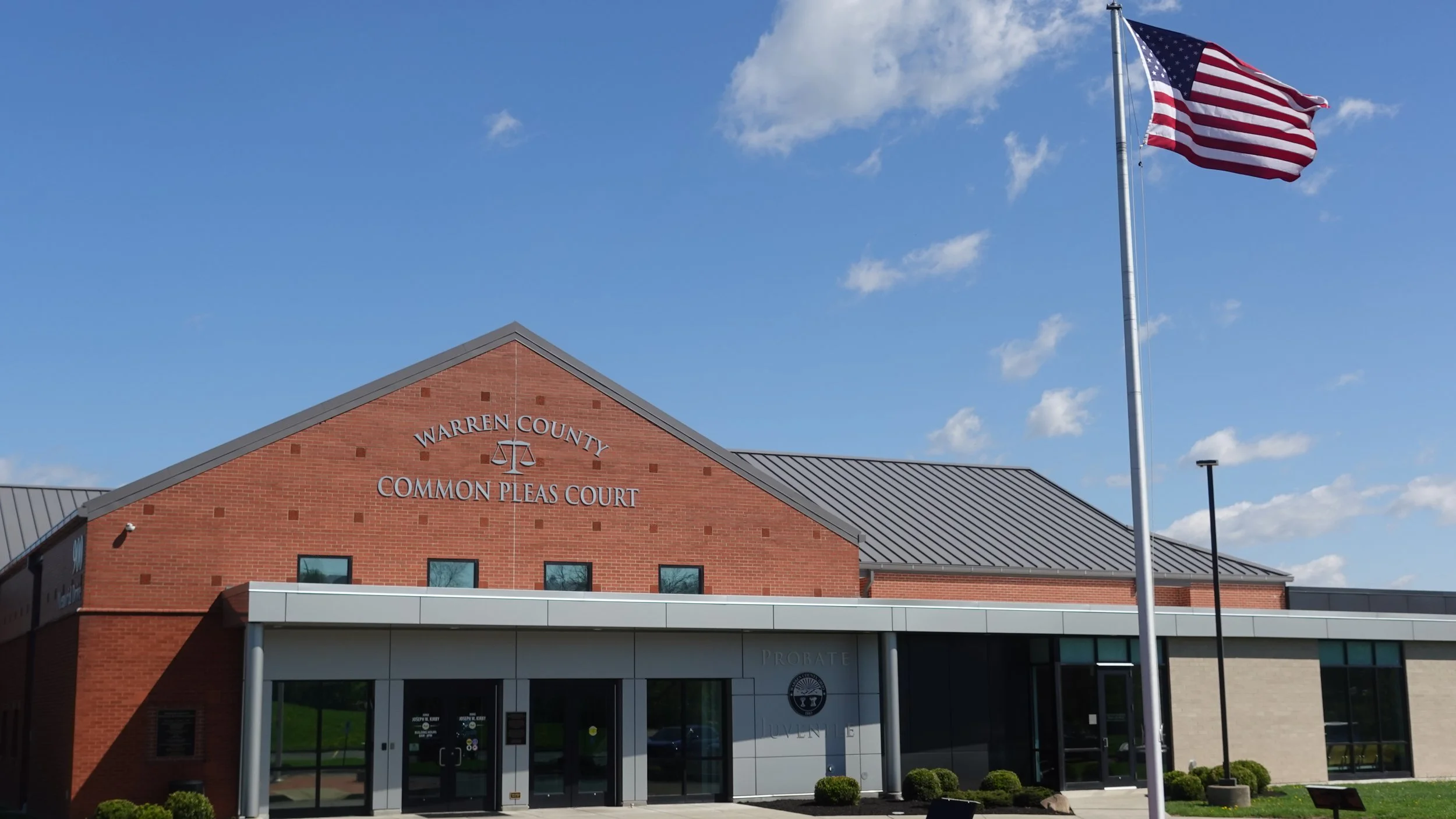
Warren County CASA recruits, trains, and supports CASA volunteers who advocate for children experiencing abuse and neglect.
Learn more about CASA volunteer work:
CASA stands for Court Appointed Special Advocates. CASA volunteers are trained community members from all walks of life who are appointed by judges and magistrates to advocate for the best interest of children experiencing abuse and neglect.
CASA volunteers get to know the child by speaking with them and the important adults in their lives, staying with the case from beginning to end.
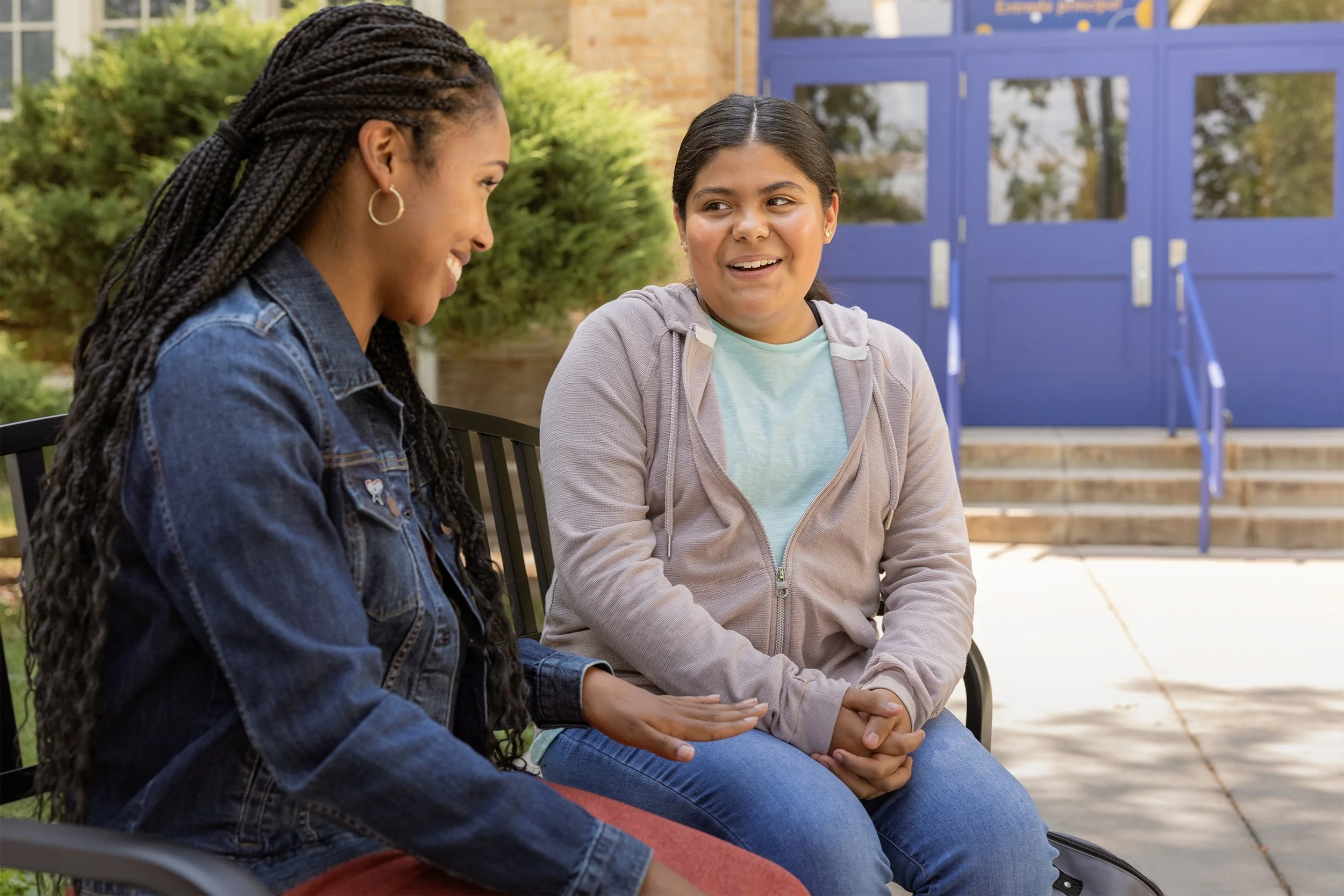
Often serving as the only consistent adult presence, CASA volunteers ensure the child’s voice is heard in court. They share the child’s needs and wishes and provide informed, best-interest recommendations that help guide decisions about safety, placement, and services.
A child with a CASA volunteer is:
Half as likely to re-enter foster care
Less likely to spend time in long-term foster care
More likely to have a better educational experience
More likely to receive professional services needed
More likely to be adopted
CASA FAQs
-
CASA volunteers research the child’s circumstances, determine relevant facts in a child’s case and report this information to the court. Their work helps to support the court’s decision concerning the child’s future. A CASA volunteer focuses their recommendations and actions to ensure the best interests of the child are being met. A CASA will also monitor a case—making sure that services ordered are actually provided, and that the court is informed of any new developments. Every case is unique, but a CASA volunteer often must recommend to the court whether or not a child should stay or be reunified with his or her biological parents, be placed in foster care, or be available for adoption with another family. Though the final decision always rests with the judge or magistrate, a CASA volunteer does their best to inform the court as an independent and objective voice for the child.
-
CASA or guardian ad litem (GAL) volunteers are unpaid community members who have made a commitment to advocate for abused, neglected and dependent children. Community members interested in becoming CASA/GAL volunteers must: Be 21 years old; Agree to a criminal background check; Complete at least 30 hours of pre-service training; and accumulate 12 hours of continuing education each year. Volunteers are closely screened by local programs for competence, commitment and objectivity.
-
CASA volunteers come from all walks of life here in Warren County, with a variety of professional, educational and cultural backgrounds. Our program has volunteers who work both full and part time jobs, and other volunteers who are retired. Because the children served by CASA volunteers are diverse in background and need, we strive to recruit volunteers diverse in skill.
-
CASA volunteers receive thorough training. The pre-service training takes a minimum of 30 hours. Through this training volunteers learn about courtroom procedure from those in the profession— judges, lawyers, social workers and court personnel. Volunteers also learn effective advocacy techniques for children and are educated about specific topics ranging from child abuse to how to give a report in court. The culmination of the pre-service training is the swearing-in ceremony. Volunteers also have opportunities during the course of the year to attend in-service trainings, which focus on relevant and timely topics for the CASA volunteer. In addition, CASA volunteers are required to complete 12 hours of in-service training annually.
-
Each case is different. When a case is initially assigned, a CASA volunteer may spend five to ten hours per week researching the case history and conducting interviews. Volunteers spend anywhere from five to 15 hours a month thereafter. Some cases may continue for two years or longer, and volunteers are asked to commit until a case has been closed. Because caseworker and service provider turnover can be high, often the CASA/GAL volunteer is the only consistent presence in the child’s life.
-
Data shows children who are assigned a CASA volunteer: Spend less time in the court system and less time in foster care than those who do not have CASA representation; are more likely to be placed in permanent homes; and receive more services than children without CASA volunteer advocacy.
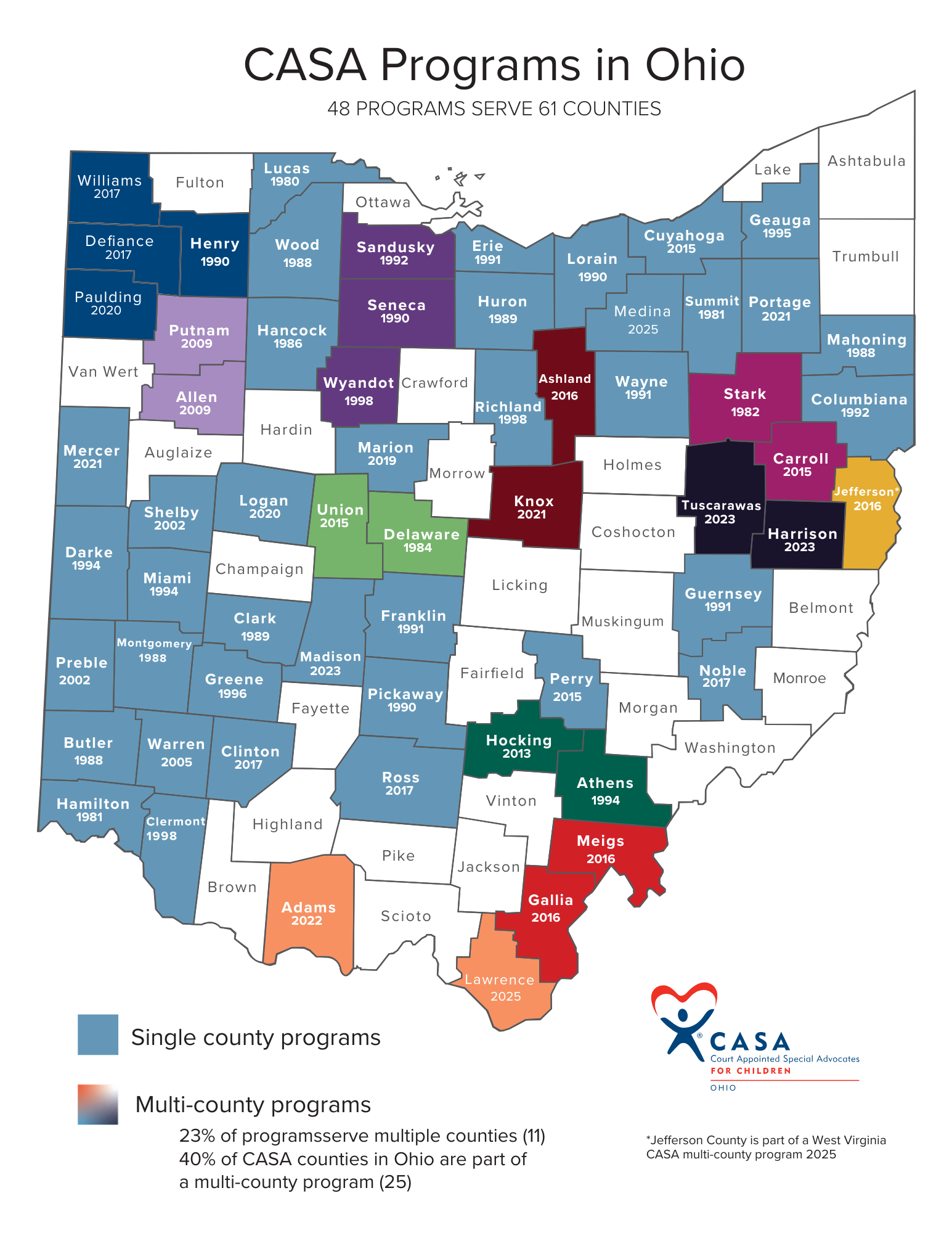
Warren County CASA is part of a state and national network.
The CASA movement began in 1977 when Judge David Soukup of Seattle, Washington, first recruited community volunteers to speak as guardians ad litem on behalf of abused and neglected children in court. Judge Soukup felt frustrated that he was expected to make serious decisions regarding children with no feedback from the child and only limited information from others involved in the case. He wanted to develop a way to bring more complete information to juvenile judges so that they could better protect children. CASA volunteers proved to be an effective way to help the courts avoid inappropriate and unduly long foster care placements. As a result, other states began to adopt the idea.
The first CASA program was founded in Ohio in October 1980 in Lucas County (Toledo) by Judge Andy Devine, with help from the Junior League. Judge Devine had attended a presentation about the CASA program in Tennessee, which inspired him to take the idea back to his community. The Lucas County CASA/GAL program was third in the nation. Our program launched in 2005. Today, there are 48 programs in 61 counties in Ohio.
Click to learn more about the Ohio CASA/GAL Association and the National CASA/GAL Association.